
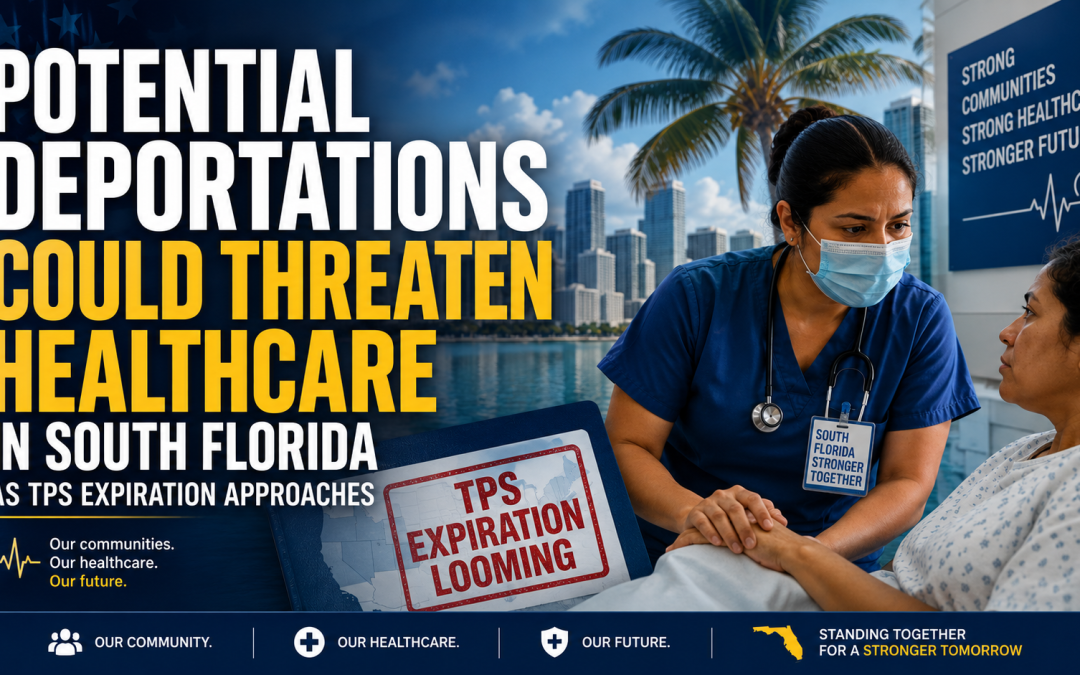
MIAMI — The potential termination of Temporary Protected Status (TPS) for hundreds of thousands of Haitian nationals in the United States has sparked concern across South Florida, where many of these immigrants play critical roles in essential sectors, including healthcare and elder care.
Sources told CBS News that U.S. Immigration and Customs Enforcement (ICE) has prepared plans to intensify arrest and deportation operations targeting Haitian immigrants. This development coincides with the impending expiration of deportation protections and work authorization for more than 300,000 Haitians currently covered under the TPS program.
Impact on the Community and Healthcare Sector
The debate surrounding the future of TPS has immediate human consequences. Allyn McKinney, a 90-year-old military veteran from Florida, relies on a Haitian caregiver who has tended to his family for over a decade. For safety reasons, CBS News has not identified the caregiver, whose immigration status could be jeopardized by upcoming legal changes.
McKinney stated that losing his caregiver would be difficult, but his primary concern lies with the caregiver’s well-being and the conditions she would face upon return.
“It would be difficult,” McKinney said. “But it would be harder for her. And that bothers me more than it bothers me.”
The caregiver has resided in the United States for more than ten years. Her potential return to Haiti presents significant risks, as the U.S. Department of State currently maintains a Level 4 Travel Advisory for the country, advising U.S. citizens not to travel there due to high rates of crime, kidnapping, and civil unrest.
Legal Debate and Expert Perspectives
Amidst the uncertainty, families like McKinney’s have sought assistance from immigration attorneys such as Emmanuella Telfort. Telfort noted that many Haitian TPS holders have spent years building lives, careers, and families in the United States, yet lack a clear pathway to permanent legal status.
“If it is temporary, that term ‘temporary’ is the point of contention,” Telfort said. “Let’s remove the word ‘temporary’ and establish a more permanent, humane path for these individuals. That is the right thing to do.”
Telfort added that some immigration pathways can take decades to complete, whereas TPS protections for Haitians have been in place since the program was first expanded following the devastating 2010 earthquake in Haiti.
Last month, a court ruling allowed the administration to proceed with terminating certain TPS protections for Haitians. Government officials have argued that the TPS designation was never intended to be permanent and that conditions in Haiti have improved, though critics contend that instability persists.
Reactions and Government Stance
McKinney, a U.S. military veteran, expressed disappointment with the current direction of immigration policy.
“I feel ashamed for my country,” McKinney said. “As a veteran. As a U.S. citizen. I am ashamed. This is not the country I grew up in.”
In response to concerns regarding deportations, the Department of Homeland Security (DHS) issued a statement to CBS News indicating that individuals who lose their legal status should depart the United States voluntarily. However, experts warn that the forced removal of essential workers could create critical gaps in the South Florida workforce, directly impacting patient care and support for the elderly.
The community awaits further legal and administrative developments that will determine the future of these workers and their families.